
Full Dentures vs. Implant-Retained Options: Comfort, Fit, and Long-Term Stability
June 23, 2026 9:00 amReplacing all the teeth in an upper or lower arch is a major change. Some people have worn dentures for years and are ready for a more secure fit. Others are reaching the point where several teeth are loose, badly damaged, or no longer worth repairing one by one.
Full dentures and implant-retained options can both restore a complete smile. However, they work in different ways. A full denture rests on the gums and comes out for cleaning. Implant-retained teeth have support from dental implants in the jaw, which can make a difference when you are eating dinner, talking with friends, or simply trying not to think about your teeth all day.
At Hermitage Family & Cosmetic Dentistry in Hermitage, TN, Dr. Aileen Kruger and Dr. Taylor King can look at your current teeth or dentures, the condition of your gums, and the amount of bone in the jaw. From there, the conversation gets more specific. Are you mainly dealing with soreness? Does the denture move when you chew? Have you stopped eating foods you used to enjoy? Those answers can help show what is getting in the way.
Full Dentures Rest on the Gums
A full denture replaces every tooth in the upper or lower arch. It is made to sit over the gums, and it is removable for daily cleaning.
Upper dentures often stay in place better because they cover the roof of the mouth and can create suction. Lower dentures tend to be harder because the tongue, cheeks, and lower jaw are always moving. Talking, swallowing, and eating all put pressure on that lower denture, so it may take more adjustment even when it has been made carefully.
A well-fitting denture can still be a solid option. It restores the look of a full smile, gives the lips and cheeks more support, and makes eating easier than it would be with no teeth at all. Many people are comfortable with that arrangement, especially when they prefer a removable option or want to avoid implant surgery.
The challenge is that dentures depend on the gums and jawbone underneath them. Those tissues do not stay exactly the same over the years. As the jaw changes, a denture may start to slip, rock, rub, or need more adhesive than it once did.
Implant-Retained Teeth Have More Support
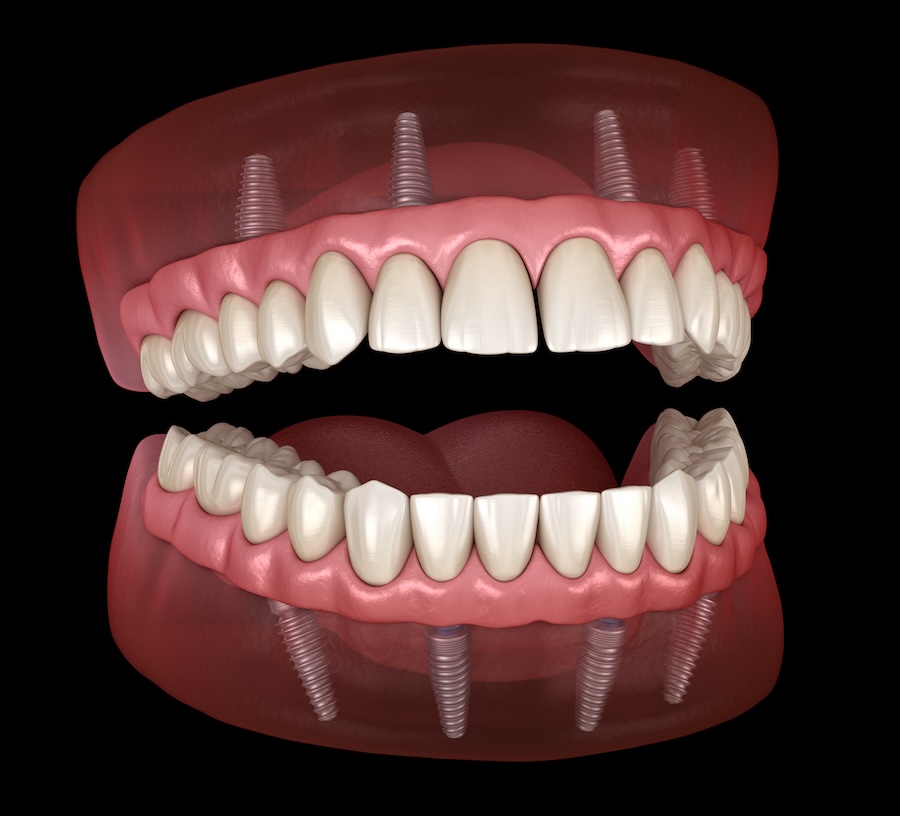
Implant-retained options use dental implants as anchors. The implants are placed in the jawbone, then used to support either a removable denture or a fixed full-arch bridge.
A removable implant-retained denture may snap onto the implants and come out for cleaning. A fixed bridge stays attached to the implants and is only removed by the dental team during maintenance appointments. Both options have more support than a denture that rests on the gums alone.
That can change the experience of wearing teeth. Instead of relying mainly on gum shape, suction, and adhesive, the denture or bridge has anchors in the jaw. Someone who has learned to chew carefully or avoid certain foods because a denture shifts may find that everyday things take less planning.
Implant-retained treatment does require surgery and healing time. There also needs to be enough bone to place the implants safely. Still, when a denture has become unreliable during meals or conversation, it can be worth finding out what level of implant support is possible.
Why Dentures Can Start Feeling Uncomfortable
A full denture can feel comfortable when it fits closely. Even then, it sits on soft tissue, so it can move a little when you bite, chew, laugh, or speak for a long time.
At first, that movement may not bother you much. Over time, though, the denture may begin pressing harder on certain areas of the gums. You might notice one sore spot after lunch, or a place that starts burning by the end of the day. Dry mouth can make this worse because there is less moisture between the denture and the gums.
Implants change where some of that chewing pressure goes. Instead of all the force resting on the gums, implant-retained teeth get support from the implants in the jaw. That can reduce the rubbing and movement that make dentures tiring to wear.
There are still adjustments with implant-retained teeth. The bite has to be checked, and the gums around the implants still need care. However, the added support can help people feel more at ease when they are talking, eating, or spending time out of the house.
Full Denture Fit Can Change Gradually
After teeth are removed, the jawbone changes over time. Without tooth roots in place, the bone can slowly lose volume. The gums change shape along with it.
At first, the signs may be small. Food starts getting under the denture more often. It may lift a little while you are talking. Then the denture may begin rubbing in one place or need more adhesive than it did before.
A reline can sometimes help. During a reline, the inside surface of the denture is adjusted so it better matches the current shape of the gums. This may improve comfort and reduce movement without requiring a completely new denture.
Relines are useful, but they do not stop the jaw from changing. Some people reach a point where they are back for another adjustment, yet the denture still does not feel as secure as they want it to. That is usually a good time to ask what other options might be available.
How Implants Can Help a Denture Stay Put
Implant support can be used in more than one way. Some people choose a removable denture that snaps onto a few implants. It still comes out for cleaning, but it has more support than a denture that rests on the gums by itself.
Other people are interested in a fixed bridge that stays attached to the implants. That is a different type of treatment, and it usually involves more implants and planning. Both options may be worth discussing, but they are not interchangeable.
For example, two implants in the lower jaw may help hold a removable denture in place. More implants can provide additional support, depending on the denture design, bone support, and the type of restoration being planned.
That can change parts of the day that have become frustrating. A denture that lifts while talking may stay in place better. You may be less concerned about it moving after taking a bite. Meals may not revolve as much around whether the denture is likely to shift.
The improvement is different from person to person. Someone with a lower denture that moves constantly may notice a big change. Meanwhile, someone with a fairly stable upper denture may be more interested in chewing better or reducing how much the denture covers the roof of the mouth.
Chewing Can Feel Different With Each Option
Full dentures can help you chew, but they do not work exactly like natural teeth. Hard, sticky, or crunchy foods may be more difficult. Many denture wearers cut food into smaller pieces, chew slowly, or avoid certain foods because they do not want the denture to move.
That can be manageable for a while. Still, meals can become less enjoyable when you are always thinking about which side to chew on or whether something is too hard to bite into. Fresh apples, firmer meats, crusty bread, and corn on the cob may become foods you skip, even though you would rather not.
Implant-retained teeth are more stable during chewing. Because the teeth have support from implants, people may be able to manage a wider range of foods with less concern about movement. There is still an adjustment period, and very hard foods can still be rough on replacement teeth. However, many people find they are not constantly waiting for the denture to lift or shift.
The bite needs careful planning too. More chewing strength is helpful, but the pressure has to be balanced across the implants and replacement teeth. Otherwise, one area may end up taking more force than it should.
Cleaning Is Different, but It Still Needs to Happen Every Day
Full dentures should be removed and cleaned daily. The gums, tongue, and roof of the mouth should be cleaned gently as well, since plaque and food debris can still collect on the soft tissues.
Implant-retained teeth need their own routine. A removable implant-retained denture can be taken out and cleaned along with the attachments and gums underneath. A fixed bridge needs cleaning around and under the bridge with special floss, small brushes, a water flosser, or a combination of tools.
The first few weeks may take some practice. Once you learn where food tends to collect and which tools are easiest to use, it becomes part of the routine.
Implants cannot get cavities, but the gums and bone around them can still become inflamed or infected. Regular dental visits give the team a chance to check the tissues, the bite, the attachments, and the condition of the denture or bridge before a small concern turns into a bigger repair.
Cost and Treatment Time Are Part of the Decision
Full dentures are usually the less involved treatment route. They do not require implant surgery, and the process is often shorter. That can make them a practical choice when someone wants to replace missing teeth without adding surgery or a longer treatment timeline.
Implant-retained options take more planning. Imaging, extractions, implant placement, healing time, temporary teeth, and a final restoration may all be part of the process. Cost can vary based on how many implants are used, whether grafting is needed, and whether the final teeth are removable or fixed.
It helps to ask what is included in the treatment plan. Find out whether temporary and final teeth are included, what follow-up visits may involve, and what future maintenance may be needed. That gives you a better sense of the full commitment rather than only the first estimate.
A full denture may be the right fit when budget, health needs, or personal preference point toward a removable solution. In other cases, implant support may feel worth the larger investment because the teeth are more secure day to day.
Full Dentures vs Implant-Retained Options in Hermitage, TN
Full dentures and implant-retained options can both replace a full arch of missing teeth. The difference is in the support underneath them. A removable denture rests on the gums, while implant-retained teeth have anchors in the jaw.
For some people, a full denture is enough. For others, regular movement, sore spots, adhesive, and limited chewing start to wear thin over time. There is no one right choice for everyone, but it helps to know what each option can realistically change.
At Hermitage Family & Cosmetic Dentistry in Hermitage, TN, Dr. Aileen Kruger and Dr. Taylor King can evaluate your gums, jawbone, bite, and current denture or remaining teeth. Call to schedule a visit when your denture is slipping, rubbing, or making meals harder than they need to be.
Contact UsCategorised in: Dental Implants, Dentures